



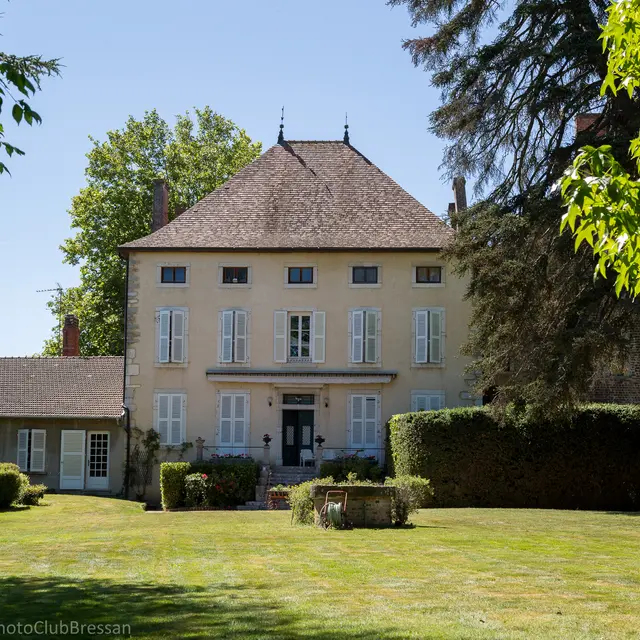
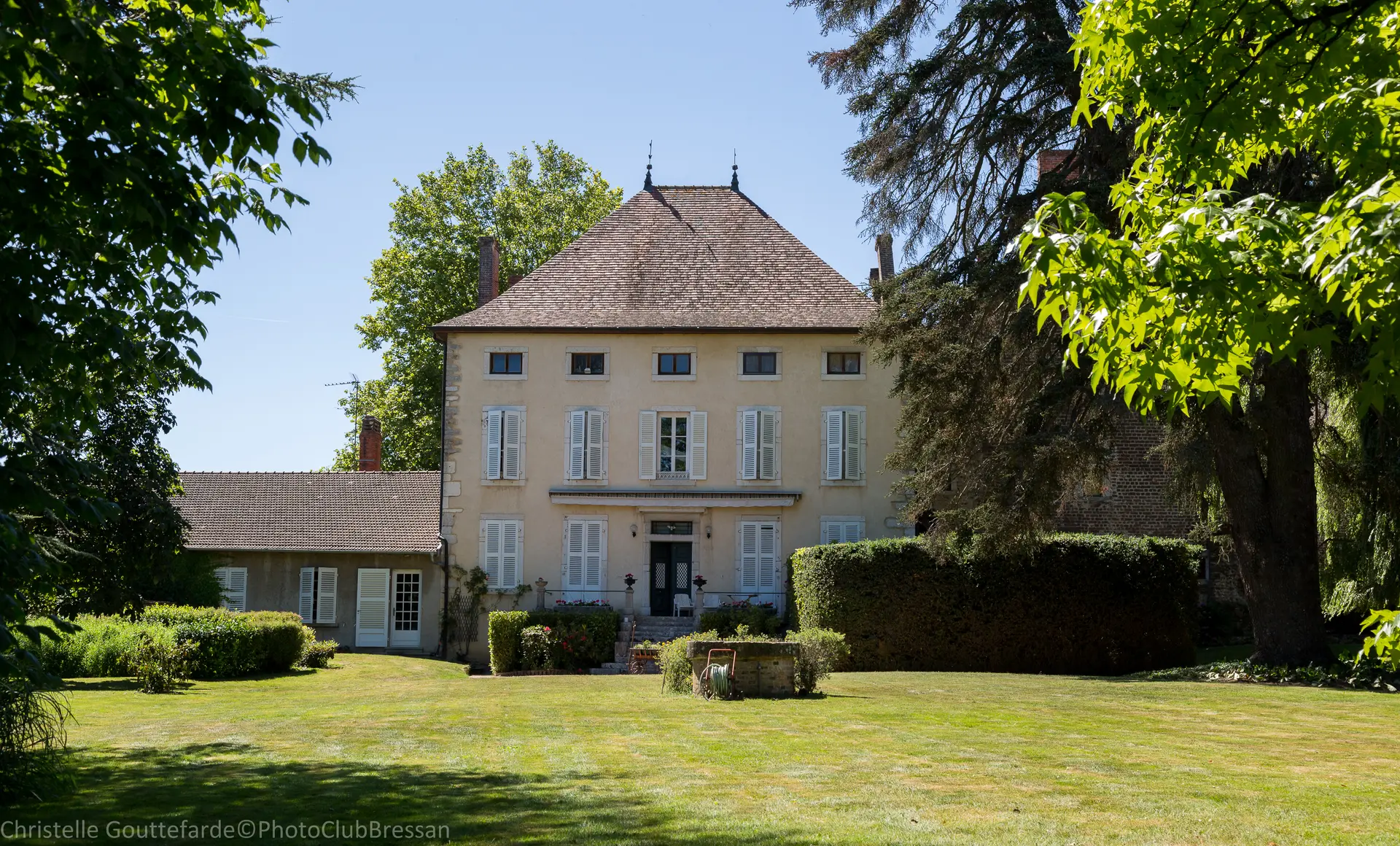
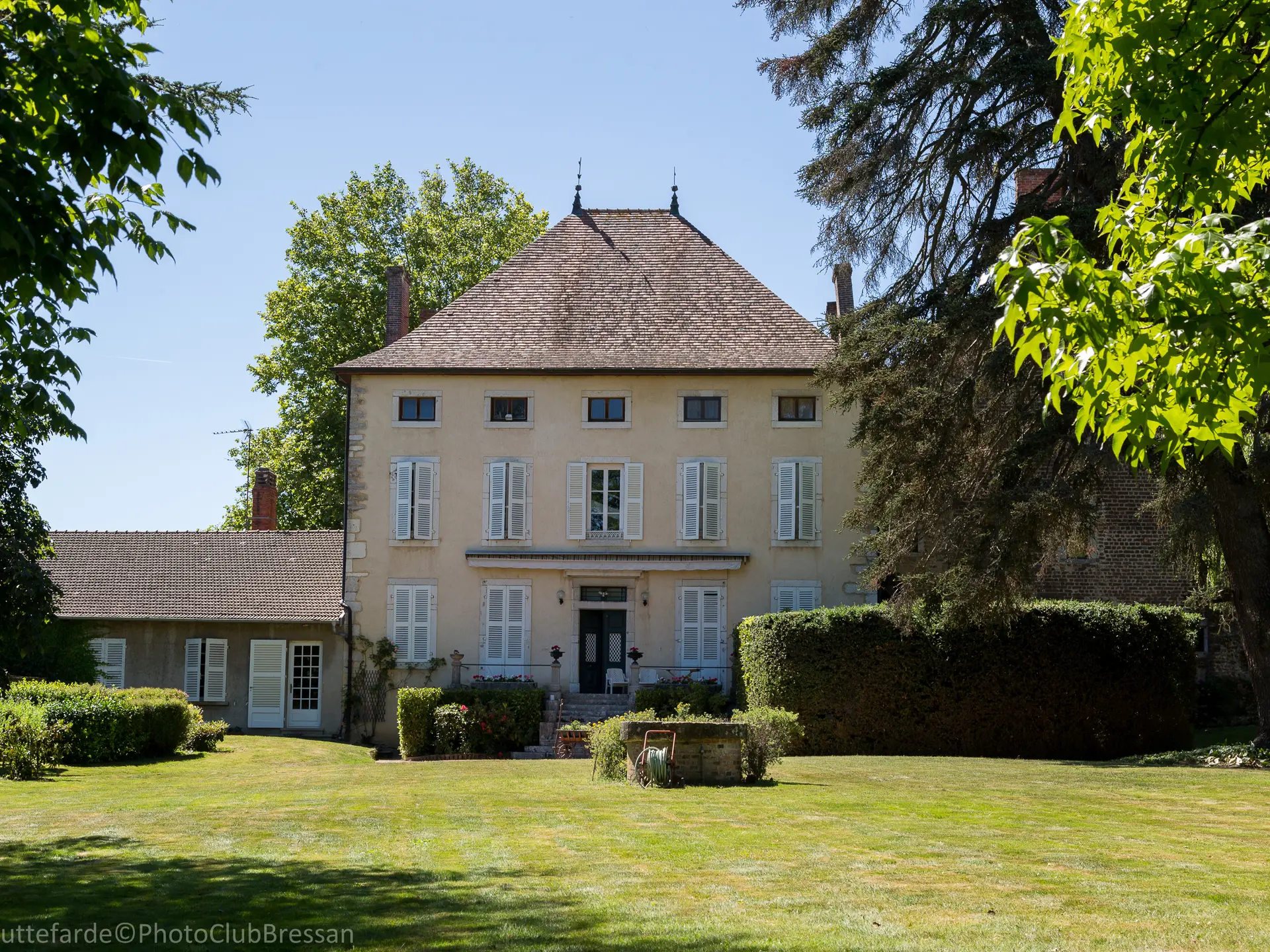
Originally, this seigneury with its fortified castle was owned by the gentlemen who bore its name, the earliest representative of whom was Hugues du Saix, who lived around 1080. The castle remained in the same family until 1454.
Château du Saix is largely built of brick, as is customary in the region. Since the mid-15th century, it has been owned by various families, including the de Loras family on the eve of the French Revolution. The Chambaud family, the current owners, acquired it in 1857. At that time, it was transformed to meet the needs of the times: some of the buildings, including the main tower, were demolished, and the courtyard, once enclosed, is now U-shaped. Listed since 1987.
The Chambauds: a family of Revermont winegrowers and merchants. Initially tenants of Le Saix (from 1840), they became owners in 1857. François-Eugène Chambaud, the son, modernized, mechanized and developed the estate's carronnière, which became one of the region's largest tile and brick factories. He patented the watertight interlocking tile, the profits from which were reinvested in the farm. By the end of the twentieth century, business was difficult, and the tile factory was sold in 1983, before ceasing operations for good in 1986.
The Chambauds: a family of Revermont winegrowers and merchants. Initially tenants of Le Saix (from 1840), they became owners in 1857. François-Eugène Chambaud, the son, modernized, mechanized and developed the estate's carronnière, which became one of the region's largest tile and brick factories. He patented the watertight interlocking tile, the profits from which were reinvested in the farm. By the end of the twentieth century, business was difficult, and the tile factory was sold in 1983, before ceasing operations for good in 1986.
Services
Services
Not open to the public
Openings
Openings
All year 2025 - Open everyday
Visible from the outside only from the heights before reaching the château.
Private property. The château is inhabited. Not open to visitors. No parking.
Private property. The château is inhabited. Not open to visitors. No parking.
Location
Location
Spoken languages
Spoken languages

Access
Access
- Château located on the Chemin de Corbie, near the Seillon state forest, on the edge of the Route de Lent (D23), where it is not advisable to stop, as there is no parking space.