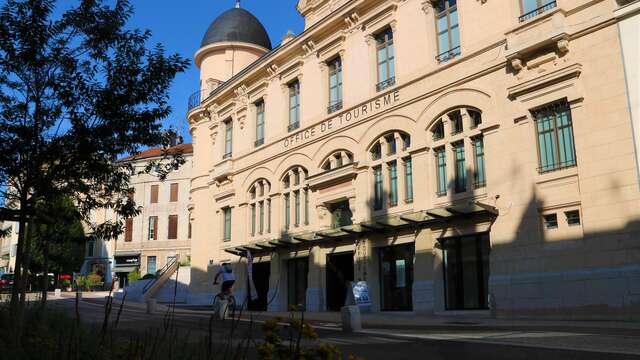



The center of Bourg-en-Bresse has a lot to offer. An itinerary (map) invites you to take a curious stroll, leaving a documented portrait of the town in your memories. Guided tours in summer
Departure from in front of the Tourist Office - Avenue Alsace Lorraine
A Haussmann-style breakthrough in 1895, testifying to the city's development and prosperity in the 20th century following the arrival of the railroads.
1 - Église réformée (1898) A striking bell tower. A little further on, a restored 15th-century house.
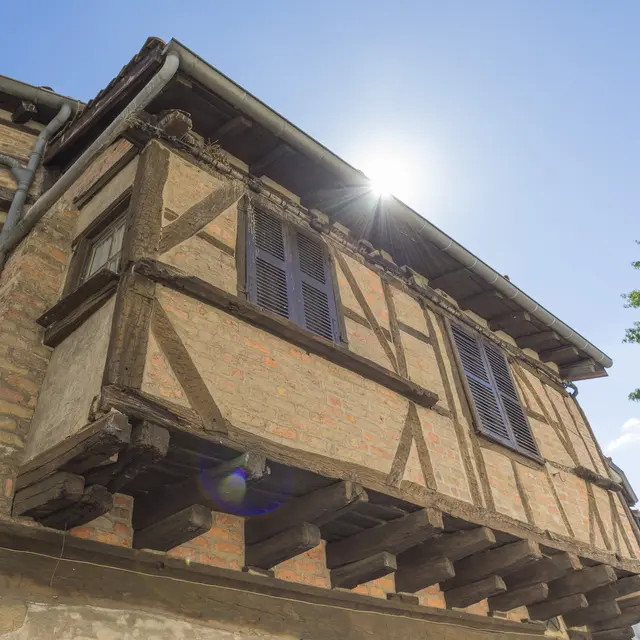
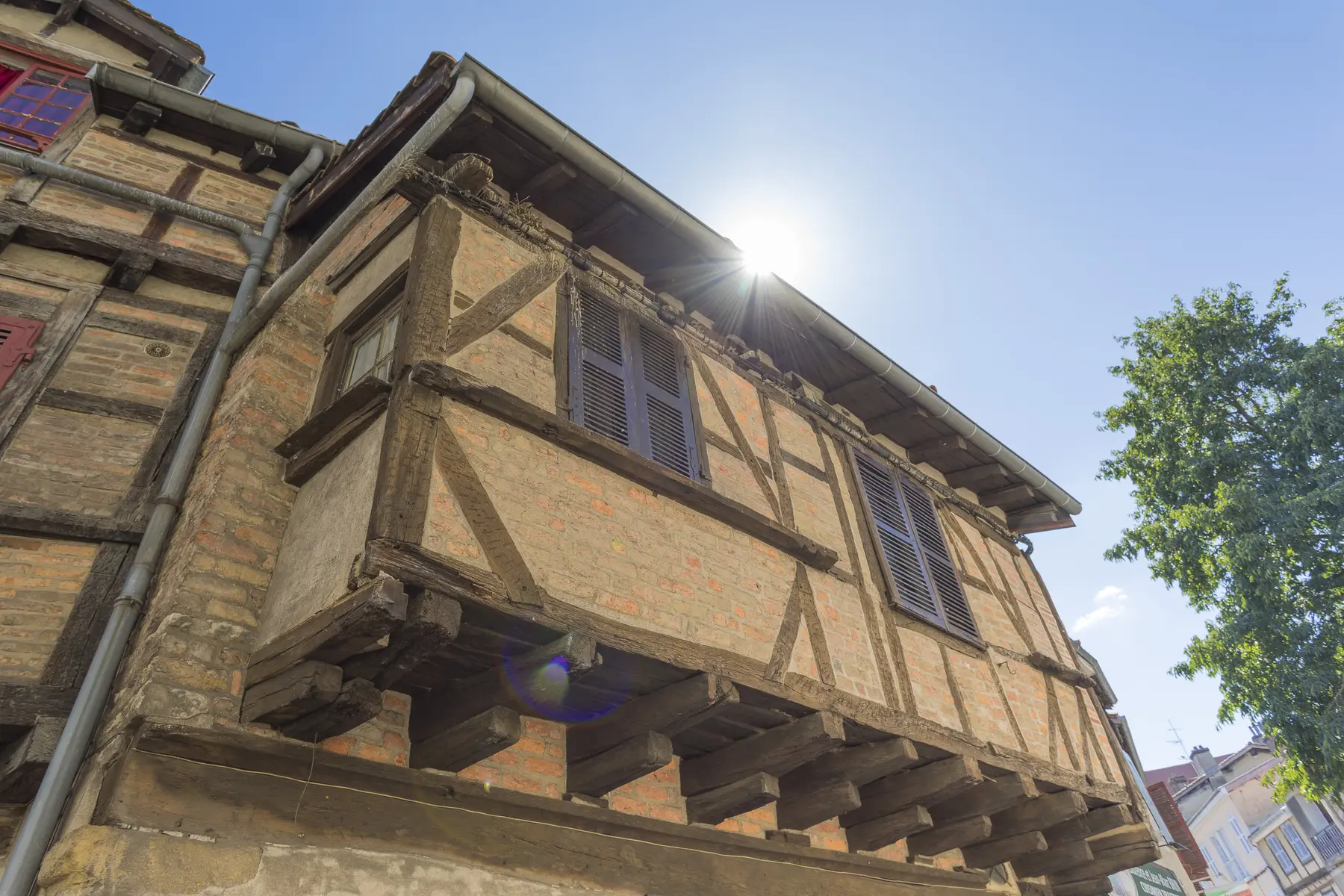
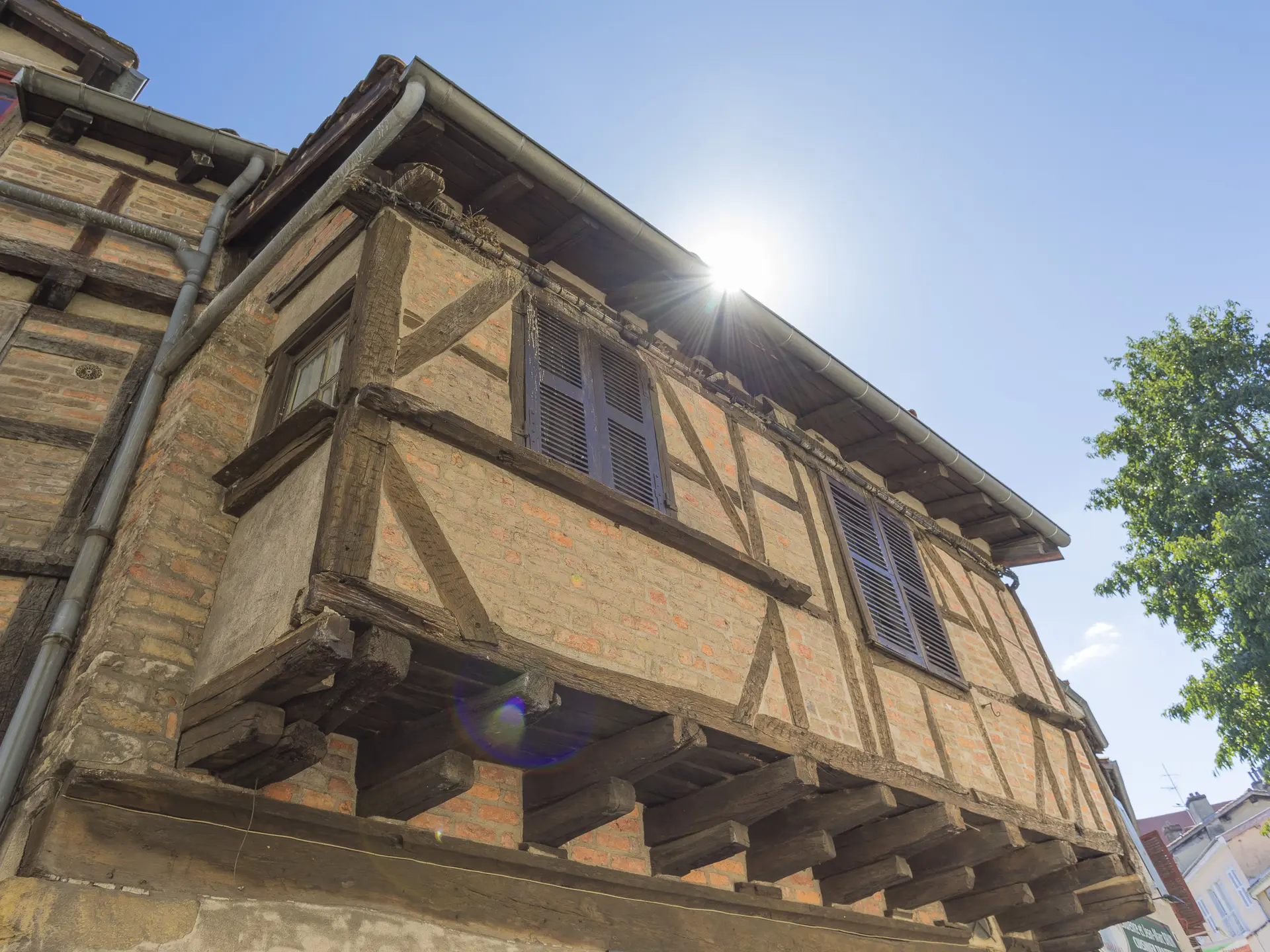
2 - Corbelled house (1425), testimony to the wealth of Burgundian craftsmen in the Middle Ages.
3 - Interesting architectural evolution in Rue Bourgmayer: on the right, a 16th-century house with mullioned windows, two 18th-century facades and an art-deco house from the 1920s (at n°6). At no. 13, the Hôtel de Loras, built around 1780.
4 - Rue des Marronniers Corbelled houses from the 15th and 16th centuries.
5 - On part of the former "chemin de ronde", a medieval turret, restored in 1627, is a reminder of the town's fortifications.
6 - Place des Lices Hill occupied by the Celts, then by the Romans, who built a castrum. In the Middle Ages, a castle was built by the Lords of Bâgé. Dismantled, it has now been replaced by a residence.
7 - Place de la Grenette Left: remains of 16th-century fortifications. In front: neoclassical building of the former grain market (now a village hall and cinema) and the theater with its columned facade.
8 - Rue Bichat On the right-hand side, a former 18th-century town house, the seat of the Prefecture between 1800 and 1856.
9 - Place de l'Hôtel de Ville built in 1771. Pediment adorned with a trophy featuring the coat of arms of Bourg-en-Bresse, with the Savoy cross trefoil. Next door, a town house built around 1730.
10 - Collégiale co-cathédrale Notre-Dame Built between 1505 and 1696. The bell tower was rebuilt by Tony Ferret between 1911 and 1914. Inside: statue of the Black Madonna, stalls, keystone in choir, stained-glass window of Saint-Crépin and Saint-Crépinien, triptych, pulpit.
11 - Half-timbered house dating from 1496, the Hugon residence, one of the most interesting in the old town. At no. 5: 17th-century half-moon ironwork; at no. 12: 16th-century facade; opposite: mural fresco; at nos. 22-24: corbelled half-timbered house; at no. 21: former Hôtel du Gouvernement.
12 - Place Quinet "Quatre chemins" fountain by Yvon Avoscan (1989).
13 - Porte des Jacobins (1437) one of three entrances to the former Dominican convent founded in 1414. In the extension: 15th-century weavers' houses with corbelled facades.
14 - Impasse Littré: a string of medieval houses (15th c.). At no. 2: narrow house equipped with a jacobine with pulley. At the corner with rue de la République: 16th-century house and three culs-de-lampe.
15 - Chapelle des Jésuites Imposing portal on an unfinished façade. Home to the Resistance during the Occupation, the Lycée Lalande was awarded the Resistance medal in 1946. Opposite: facade of Collège Saint-Joseph and Lycée Saint-Joseph, a chapel (1841-1857) built on the site of the Jacobins chapel (destroyed during the Terror).
16 - Hôtel de Meillonnas (1774) Edgar Quinet spent part of his childhood here. The facade features Louis XV-style balconies. On the right: an 18th-century Vierge de quartier; at no. 11: Henri II-style facade (16th century).
Round off your visit with 2 tours within walking distance of the town center
17 - Hôtel-Dieu apothecary Three remarkably well-preserved rooms, including one of the few laboratories open to the public. Visit by reservation at the Tourist Office.
18 Monastère royal de Brou Church with multicolored glazed roof, a masterpiece of flamboyant Gothic, built in the early 16th c.: three princely tombs, stone rood screen, altarpiece of the Seven Joys of the Virgin. Three cloisters and an art museum.
A Haussmann-style breakthrough in 1895, testifying to the city's development and prosperity in the 20th century following the arrival of the railroads.
1 - Église réformée (1898) A striking bell tower. A little further on, a restored 15th-century house.
2 - Corbelled house (1425), testimony to the wealth of Burgundian craftsmen in the Middle Ages.
3 - Interesting architectural evolution in Rue Bourgmayer: on the right, a 16th-century house with mullioned windows, two 18th-century facades and an art-deco house from the 1920s (at n°6). At no. 13, the Hôtel de Loras, built around 1780.
4 - Rue des Marronniers Corbelled houses from the 15th and 16th centuries.
5 - On part of the former "chemin de ronde", a medieval turret, restored in 1627, is a reminder of the town's fortifications.
6 - Place des Lices Hill occupied by the Celts, then by the Romans, who built a castrum. In the Middle Ages, a castle was built by the Lords of Bâgé. Dismantled, it has now been replaced by a residence.
7 - Place de la Grenette Left: remains of 16th-century fortifications. In front: neoclassical building of the former grain market (now a village hall and cinema) and the theater with its columned facade.
8 - Rue Bichat On the right-hand side, a former 18th-century town house, the seat of the Prefecture between 1800 and 1856.
9 - Place de l'Hôtel de Ville built in 1771. Pediment adorned with a trophy featuring the coat of arms of Bourg-en-Bresse, with the Savoy cross trefoil. Next door, a town house built around 1730.
10 - Collégiale co-cathédrale Notre-Dame Built between 1505 and 1696. The bell tower was rebuilt by Tony Ferret between 1911 and 1914. Inside: statue of the Black Madonna, stalls, keystone in choir, stained-glass window of Saint-Crépin and Saint-Crépinien, triptych, pulpit.
11 - Half-timbered house dating from 1496, the Hugon residence, one of the most interesting in the old town. At no. 5: 17th-century half-moon ironwork; at no. 12: 16th-century facade; opposite: mural fresco; at nos. 22-24: corbelled half-timbered house; at no. 21: former Hôtel du Gouvernement.
12 - Place Quinet "Quatre chemins" fountain by Yvon Avoscan (1989).
13 - Porte des Jacobins (1437) one of three entrances to the former Dominican convent founded in 1414. In the extension: 15th-century weavers' houses with corbelled facades.
14 - Impasse Littré: a string of medieval houses (15th c.). At no. 2: narrow house equipped with a jacobine with pulley. At the corner with rue de la République: 16th-century house and three culs-de-lampe.
15 - Chapelle des Jésuites Imposing portal on an unfinished façade. Home to the Resistance during the Occupation, the Lycée Lalande was awarded the Resistance medal in 1946. Opposite: facade of Collège Saint-Joseph and Lycée Saint-Joseph, a chapel (1841-1857) built on the site of the Jacobins chapel (destroyed during the Terror).
16 - Hôtel de Meillonnas (1774) Edgar Quinet spent part of his childhood here. The facade features Louis XV-style balconies. On the right: an 18th-century Vierge de quartier; at no. 11: Henri II-style facade (16th century).
Round off your visit with 2 tours within walking distance of the town center
17 - Hôtel-Dieu apothecary Three remarkably well-preserved rooms, including one of the few laboratories open to the public. Visit by reservation at the Tourist Office.
18 Monastère royal de Brou Church with multicolored glazed roof, a masterpiece of flamboyant Gothic, built in the early 16th c.: three princely tombs, stone rood screen, altarpiece of the Seven Joys of the Virgin. Three cloisters and an art museum.
Services
Parking nearby
Rates
Discovery booklet on sale for €0.50 at the Bourg-en-Bresse destinations tourist office or free download from the www.bourgenbressedestinations.fr website.
Openings
All year 2026 - Open everyday
Location
Contact Bourg-en-Bresse discovery tour
Spoken languages
Spoken languages